
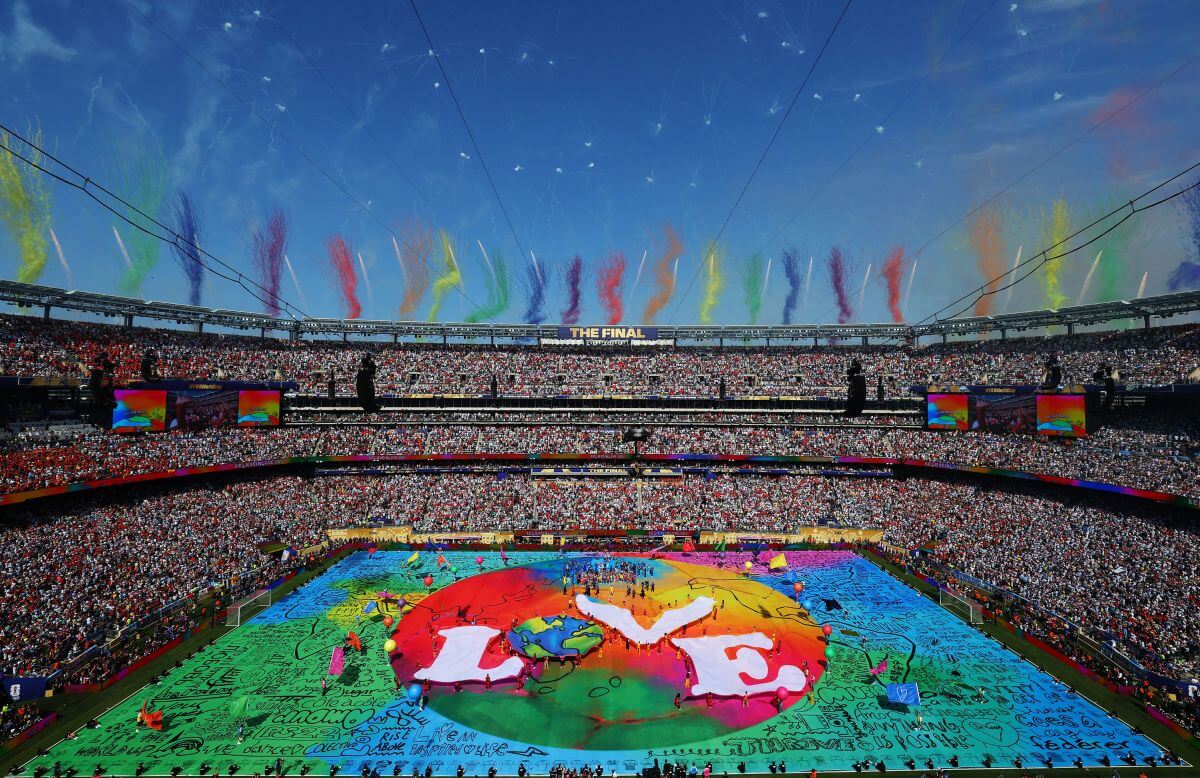

The FIFA World Cup fever may be over, but its memories remain. During one of the halftime breaks, children performed a song about love, hope and unity. The audience applauded, and many praised the message. The United States and others celebrated the performance as a reminder of the values that bring people together.
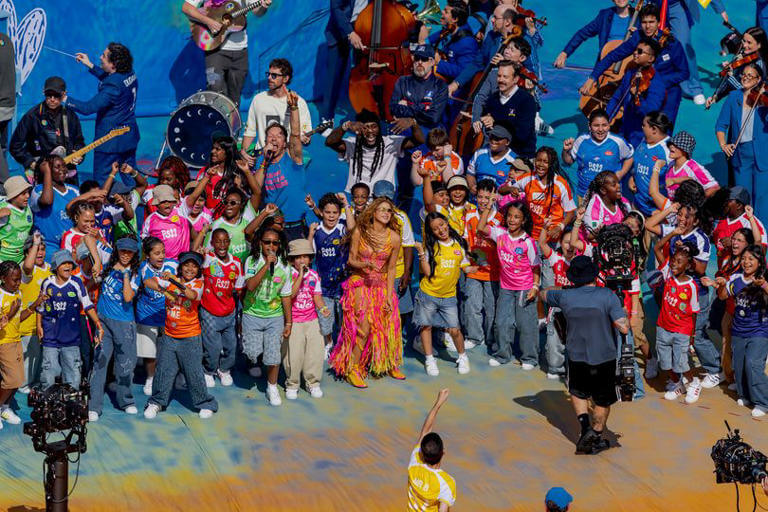
Yet for many observers, the moment raised a difficult question.
How can the world so passionately embrace messages of love and compassion on a football stage while children in Gaza continue to live through war, fear and uncertainty?
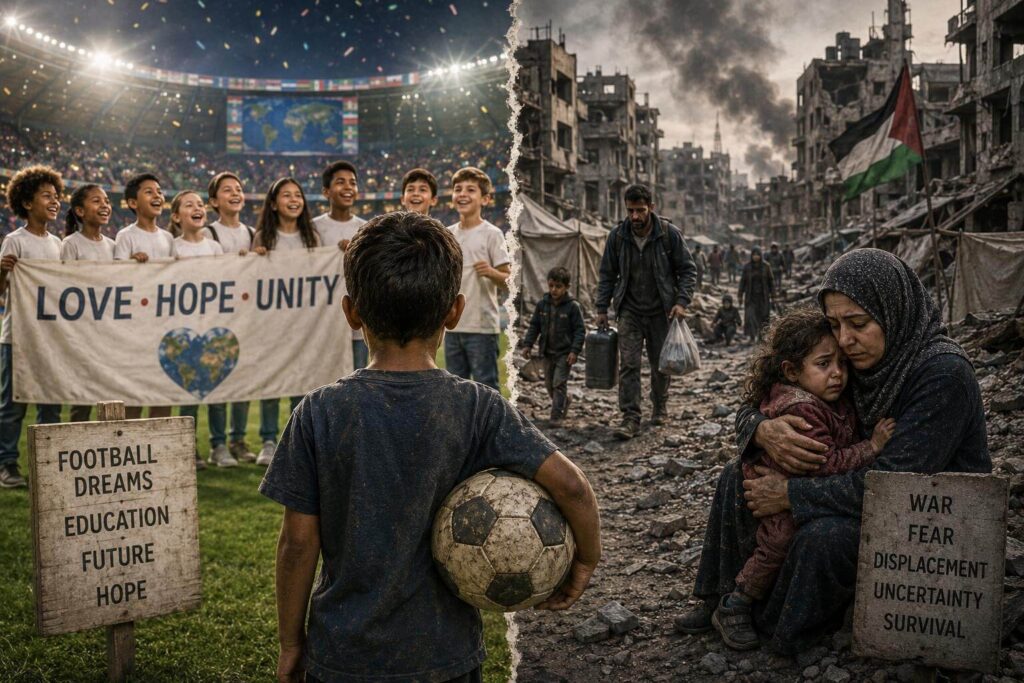
These are children who dream of playing football, going to school and living freely, just like children everywhere else. But instead of thinking about the next match or their future ambitions, many wake up each day unsure whether they will see another sunrise.
For them, the greatest question is not who will win the next game.
It is whether tomorrow will come at all.
The contrast is difficult to ignore. While millions of children around the world enjoy sport, education and dreams of the future, many children in Gaza continue to live with displacement, fear and uncertainty.
Gaza is more than a battlefield. It has become a test of humanity, diplomacy and global leadership.
How do you explain to a child that there is no bread today, no clean water, no safe place to sleep, and perhaps no certainty about tomorrow? A question remains: could any of us accept watching our own children live with the fear of not knowing whether they will see another day?
But for many families in Gaza, this is no longer a question. It has become daily life.
A mother holds her frightened child not because she can stop the violence, but because she wants her child to feel safe in a world that no longer feels secure.
A father leaves home searching for flour, water, medicine or fuel, unsure whether he will return. Sometimes he comes back empty-handed. Sometimes he does not return.
Behind every image from Gaza is a human story.
There are children who no longer ask for toys or birthday celebrations. They ask whether they will survive another day.
The world often sees numbers.
But numbers do not cry.
They do not wait outside hospitals or leave empty chairs at dinner tables.
Behind every statistic is a human being, a child with dreams, a parent with hopes, a family that wanted nothing more than a normal life.
The suffering in Gaza cannot be measured only through destroyed buildings or casualty figures. It must also be understood through interrupted childhoods, broken families and futures that may never be fulfilled.
For many around the world, the United Nations itself has become a difficult question. An organisation created to protect peace, human rights and international law is facing growing criticism over whether its warnings and condemnations are enough when civilian lives remain at risk.
The greatest concern has been the impact on children. Thousands of children have been among those killed and injured in Gaza, according to humanitarian organisations, while many more have experienced displacement, trauma and the loss of family members. Human rights groups and international observers have raised serious concerns about the protection of civilians and allegations of attacks that have affected children.
The question facing the international community is not only how many statements are made, but whether existing systems are strong enough to prevent further suffering and protect those who are most vulnerable.
Nearly three years into the war in Gaza, the world continues to witness immense human suffering while many of the same questions remain unanswered. International leaders and institutions continue to issue statements, call for restraint and demand protection of civilians, but critics argue that stronger and more decisive action is needed when international law and civilian lives are at stake.
For many people around the world, the question remains: how long can diplomatic warnings continue without stronger measures to prevent further loss of innocent live.
The role of powerful allies, particularly the United States, has also become part of the global debate. While Washington has supported humanitarian efforts and ceasefire negotiations, critics argue that greater pressure is needed to protect civilians and prevent further suffering.
Israel has maintained that its military actions are aimed at protecting its citizens, securing the release of hostages and preventing Hamas from carrying out future attacks. Israeli officials argue that any long-term ceasefire must address Israel’s security concerns.
Hamas, meanwhile, has said that any sustainable ceasefire must include an end to Israeli military operations in Gaza and guarantees regarding the territory’s future. The group has also raised issues including Palestinian prisoners and humanitarian conditions.
Negotiations continue to involve difficult questions: hostages, security arrangements, humanitarian access, reconstruction, governance and the future of Gaza.
But when talks fail, the consequences are not experienced by politicians sitting at negotiation tables.
They are experienced by families searching for food and clean water.
Children waiting for safety.
Parents trying to protect their loved ones.
The conflict has also highlighted the dangerous role of journalists. Reporters working in Gaza have attempted to document the realities of war under extremely difficult conditions. Many journalists have lost their lives while reporting from the ground, raising serious concerns among press freedom organisations about the risks faced by those trying to bring information and human stories to the world.
The way this conflict is understood globally is also shaped by media coverage. Millions experience Gaza through headlines, images and social media. While reporting from an active war zone is extremely challenging, journalists play a crucial role in documenting events and giving visibility to civilian experiences.
Perhaps the greatest danger is not only the destruction itself, but the possibility that the world becomes accustomed to seeing it.
The world will continue debating Gaza in parliaments, diplomatic meetings and international forums. Leaders will continue discussing security, politics and possible solutions.
But beyond every argument lies a simple truth:
Children everywhere deserve the chance to grow, dream and live without fear.
The children of Gaza are not numbers.
They are children with names, hopes and futures.
Behind every statistic is a human story, one that deserves to be seen, heard and remembered.

Leave a Comment